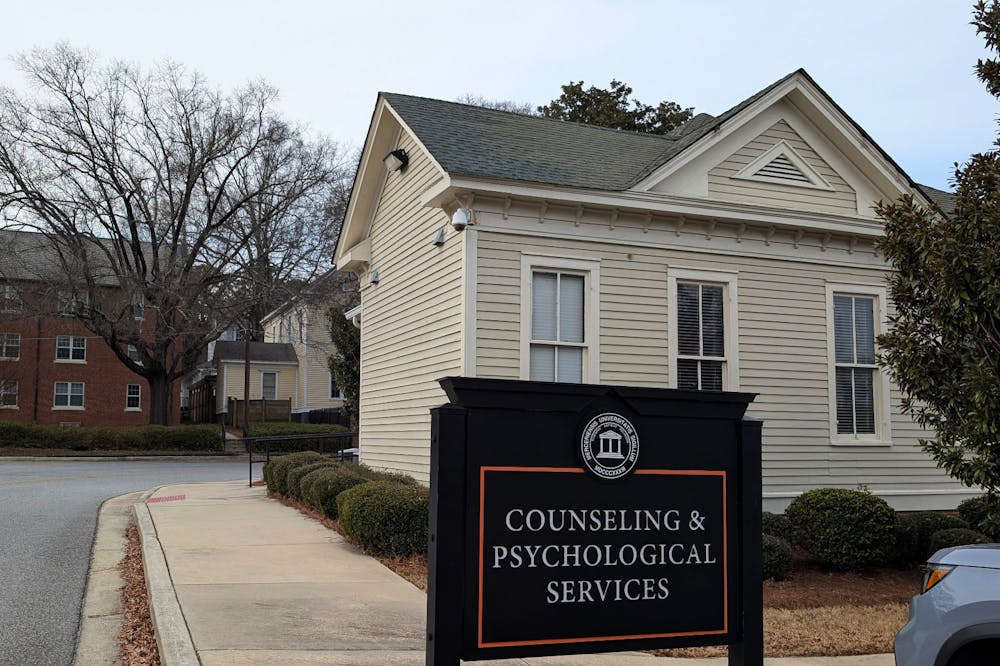
Mercer’s Counseling and Psychological Services is relaunching a peer counseling program this semester for students who may feel more comfortable talking to trained students than CAPS counselors.
The Advocating for Wellness and Responsibility Everyday program is a group of 20 undergraduate students who work with CAPS as peer educators to advocate for mental health and wellness in the Mercer community. They will share resources through presentations, tabling events and social media. CAPS Staff Counselor Kathryn Scoggins said AWARE has been an idea for a long time, with the program originally opening in the 2000s before being discontinued.
“Most of the time when we ask what CAPS can do to better serve the community, we get a lot of people asking about peer counseling,” Assistant Director Shaun Kell said.
“Peer counselors are uniquely able to empathize with fellow students. the same reason, some students may find a peer counselor to be more approachable than a professional counselor,” Scoggins said. “Peer counselors are expected to provide non-judgmental support and act as a bridge to campus resources.”
CAPS counselors have a log of who the peer counselors meet with and are equipped to offer their expertise if needed. Sessions won’t take place at the CAPS building. Peer counselors and students can choose a location to meet outside of bedrooms or residential halls, and the peer counselors are required to have weekly check-ins with the staff counselors.
“It might sort of break down some of the stigma surrounding counseling,” Scoggins said. “We also wanted to give our students who were interested in counseling professions a taste of what that would be like while they were still undergraduates.”
The AWARE program has a vigorous application process including interviews with the CAPS staff and a written application. Applicants must attend training sessions that cover the mission, goals and expectations of AWARE. Prospective peer counselors begin training following a semester in the AWARE program, then they are trained in effective listening and problem solving through the NASPA Certified Peer Educator program
“The training for peer counseling was a great experience and allowed us to role play as peer counselors and discuss major struggles college students face,” Shelby Stevenson ‘26 said. She is one of the program’s co-leads and “strongly believes” having this additional resource is important.
Peer advisors sign confidentiality agreements as part of their training, according to Scoggins. However, they are required to share information that could impact their own safety or the safety of another student with the Title IX office.
“Professional counselors are not mandated to make Title IX reports. Peer counselors are,” Kell said. “But other than that, the standing rule is that everything you tell your peer counselor is as private as if you were telling one of us.”
Scoggins said peer counselors are instructed to be transparent about this distinction.
“No one will be at risk of being blindsided by anything,” Scoggins said.
Geetanjali Angara ‘29 is an International Affairs major at Mercer University and a staff writer at The Cluster. Her hobbies are reading, writing and playing piano. You can typically either find her with a good book or singing a Taylor Swift song.