Sitting on a gravel driveway, squished between Betts Field, Mercer's soccer complex, and Auxiliary Services headquarters, a black Nissan Sentra with gold-coated rims was undergoing an inspection. Mercer graduate student Matthew Coburn exited the vehicle, waiting for his team to arrive in their souped-up Hondas and $60,000 Corvettes.
As he opened the garage, thin streaks of the early-evening sunlight slipped through the gaps of the sheet-metal wall. Gray dust wafted through the air. The scrunching of gritty sneakers echoed off the clunky car parts spread across the floor. In the back laid a pile of tires and to the left, a long work bench was cluttered with sooty tools. Across from the bench sat the Mercer Car Club's current project, a black Chevrolet staring at its detached bumper.
Looking at the Chevrolet's empty engine bay, a small group of car lovers discussed their club’s budget and logistics as they walked around the room, gazing at their shop’s messy inventory. While they thought about upcoming financial deadlines, the remainder of the group arrived outside to bond over their 600-horsepower engines and stock tires from 2011.
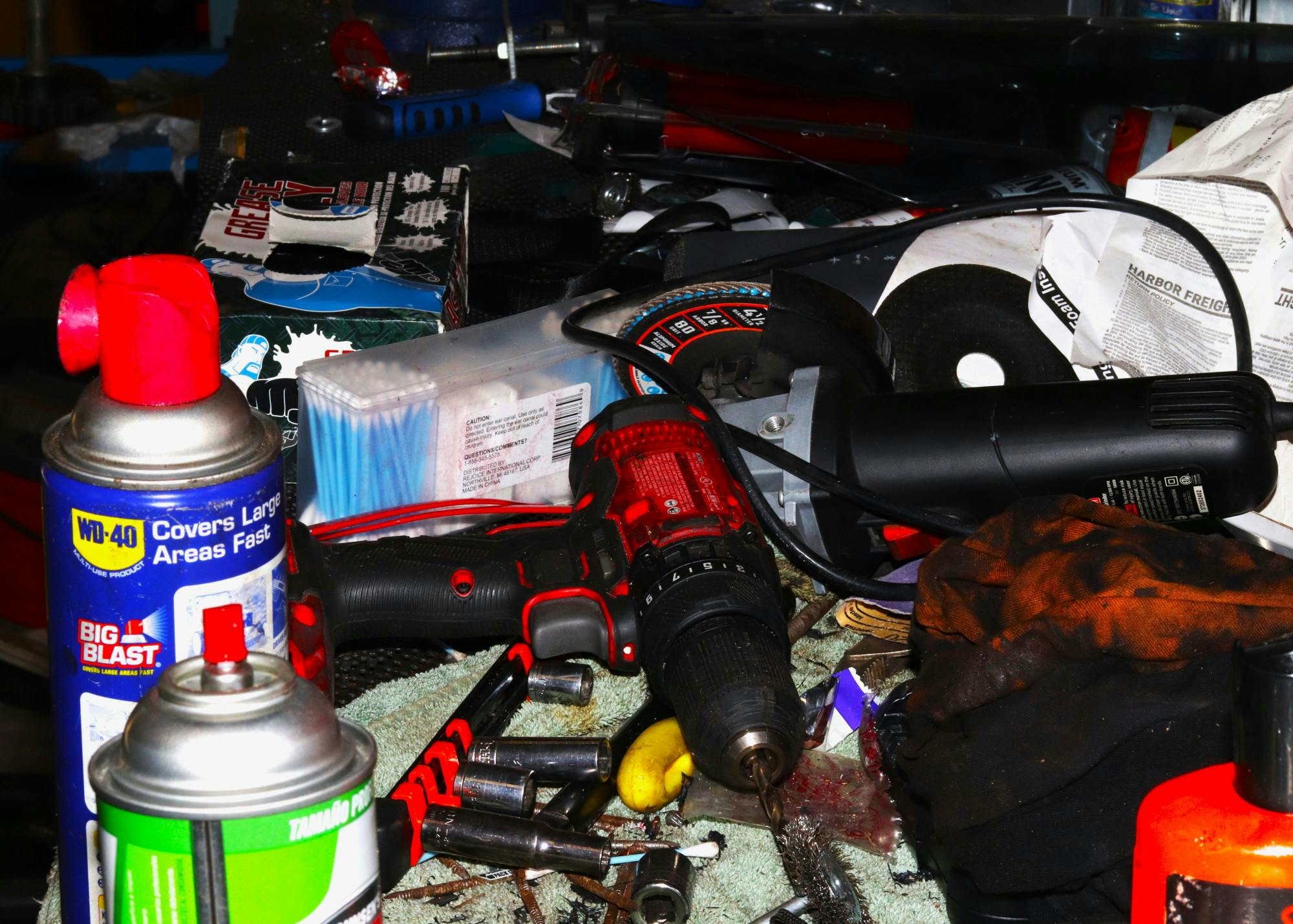
WD-40, drive sockets and and an electric drill sit atop a workbench in Mercer Car Club's garage.
The club's leadership is fighting an uphill battle to promote a community that Coburn, the club’s president, says is misunderstood.
Coburn recalled the days he spent in awe of Lamborghinis and Ferraris. He said that, like himself in his childhood, there are other people who, “Love the aesthetics of cars, the looks of cars, some people love building them." He still seem to fit squarely in that category.
But, he said, "Some people love being a little reckless. We’re kind of pushing back on that.”
The team of nearly a dozen students has spent the last three months in the garage working on the gutted Chevrolet, which belongs to a club member. When it’s running, it's among the most powerful of the crew, Coburn said, adding that it can take a team of about five to six people to work on the car at once.
On Fridays, the team revs up their engines in the early evening for a weekly stop in Warner Robins. Once in a while, Coburn said, they make trips to Atlanta to drive through autocross circuits. The motorsport simulates the feel of a race track while limiting the risk of damaging vehicles by setting up cones on a road surface to create a course through which drivers race their own time and against other drivers.
“There are people who build out cars specifically for autocross, or someone brings their mom’s Honda Civic," Coburn said. "You can really just throw your car around and really push it to its limits in a safe way.”
Car Club Treasurer Philip Cox ‘27 pulled in with his 2021 Honda Civic Sport, sporting a polished jet-black look from the rims to the window tint. Cox said when he joined the club two years ago, the organization’s finances were faltering. Truist Bank closed the club’s account due to delinquency. Warner Robins Police placed the club on their radar for serious traffic violations. Mercer’s administration no longer recognized the club and pulled back its funding.
Ten years after the club’s founding in 2013, “We basically had no assets, no funding, no recognition. We worked tirelessly to get everything back together,” Cox said.
Since then, Cox has reestablished an account and the university again officially recognizes the club, and he plans on asking for funds from SGA to host events later this year.

Matthew Coburn '25 (left) and Philip Cox ‘27 (right) discuss an inventory list they say has to be finished by the end of October.
Among them, Cox said he hopes to hold car meets on campus again. The last meet was held in the spring of 2023, but that the club is aiming to organize an event next year.
Under Coburn’s guidance, the club has established a zero-tolerance policy for speeding and street racing. The executive team says the club recently removed a member for bragging about racing in a school zone.
Now, the group regularly drives to Warner Robins while keeping the importance of road safety in mind.
“Mercer doesn’t want people getting arrested. I’m sure their parents don’t want them getting arrested, either, and as the president it’s kind of my responsibility,” Coburn said.
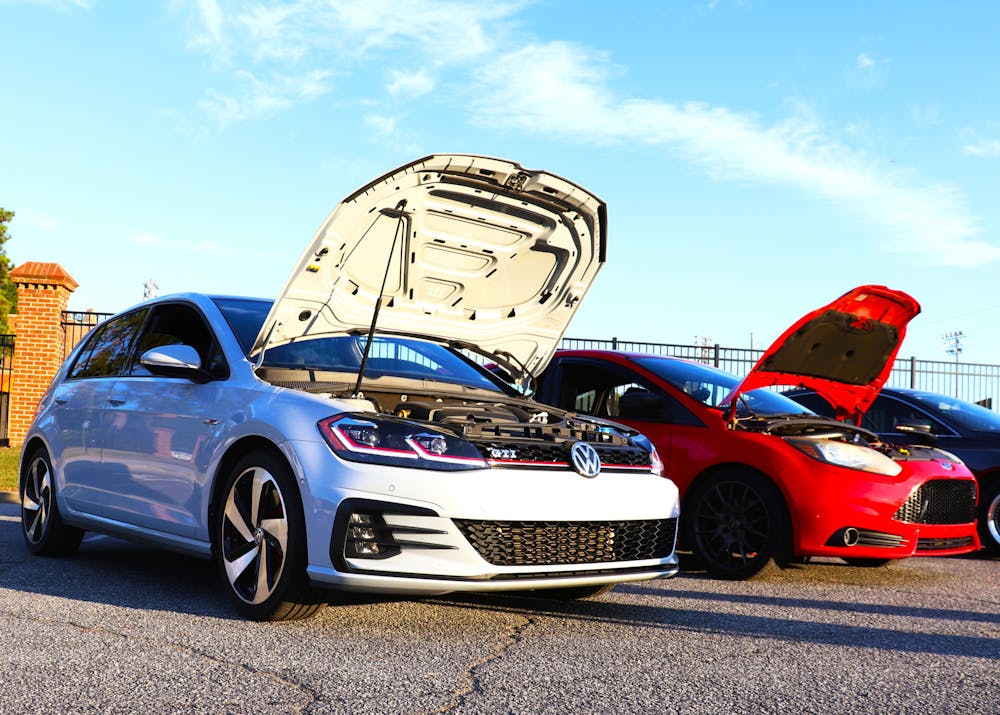
As the club’s social media manager, Gabe Diaz ‘27, stepped out of his newly purchased 2018 Volkswagen Golf GTI, the afternoon light reflected off his sunglasses. Diaz traces his love for cars to a garage in Costa Rica, his home country, where his friend’s father repaired “pieces of art” like decades-old Chevrolet Malibus. “I want to do this for the rest of my life,” he said.
He said these kinds of cars were common in Costa Rica, and their “supercars” were rugged off-road vehicles built for endurance rather than speed. “Here, it’s different.”
Diaz said American enthusiasts want to drive a “very, very fast car. That’s a big part of the culture here, something we’re hoping to change, cause that’s not really what it’s about.”
Cox blames the popularity of “takeovers” for society’s critical views of car clubs as the club tries to distance itself from street-racing culture. A takeover is an increasingly popular trend where drivers will, typically illegally, block off intersections to perform stunts and burnouts. Videos of takeovers on social media often show cars hitting pedestrians at high speeds and passengers climbing to the tops of vehicles.
Diaz says he saw a video from a takeover with thousands of people crowding a Sevierville, Tenn. store front at the Slammedenuff Car Show, which was cancelled by the city and barred from returning next year.
“I hate takeovers, I wish they would’ve never existed in the first place,” Cox said, raising his voice.
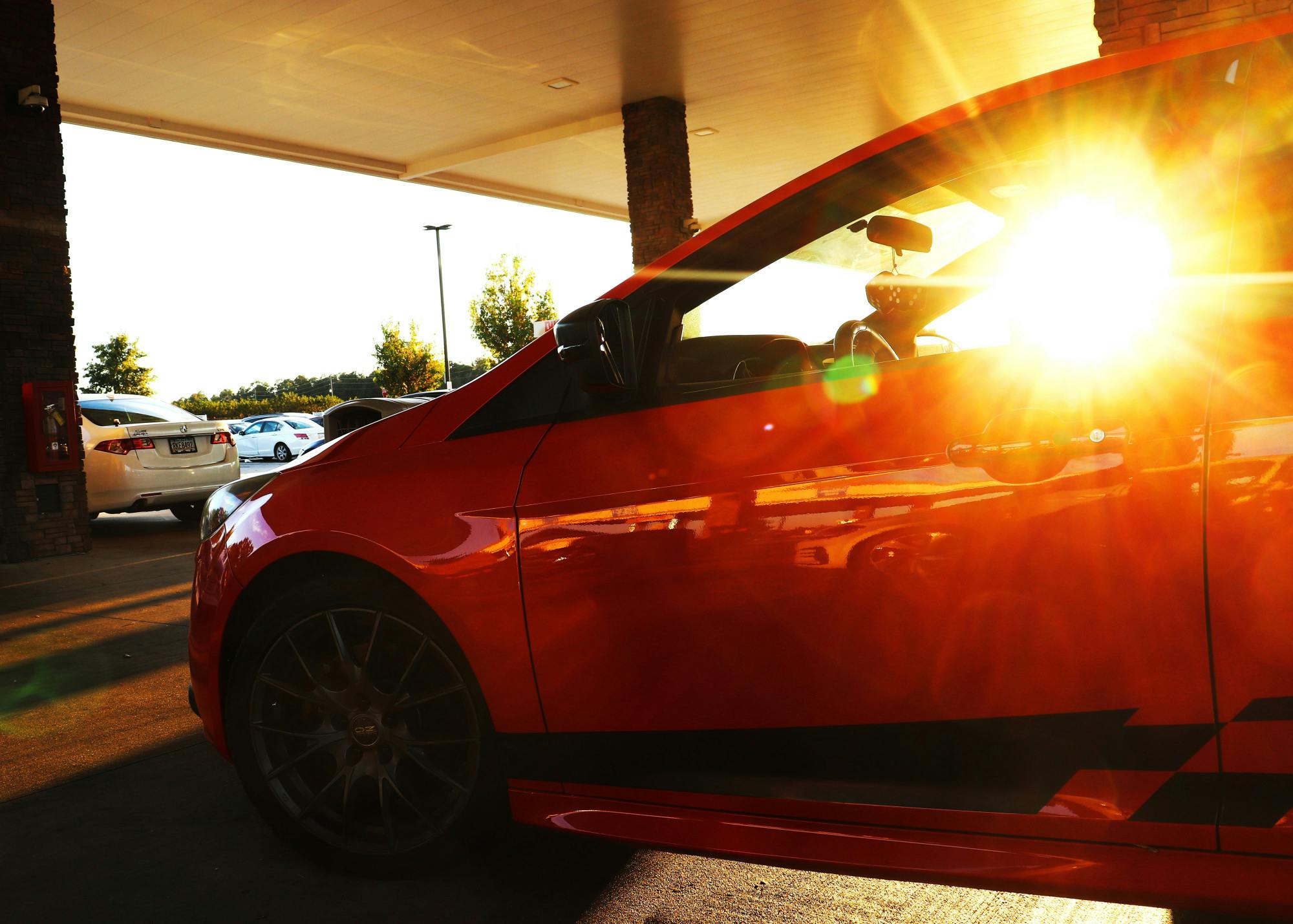
Andrew Cross '28 pulled into Buc-ee’s with the car club to stop for gas as the sun set into the night sky.
The group left campus just before 6 p.m. on their way to Buc-ee’s, their weekly pit-stop. Heading south on Interstate 75, the club drove in unison with rumbling engines filling the gaps between traffic. Keeping in the middle and right lanes, the drivers periodically revved their engines just enough to feel their torque.
Diaz’s freshly detailed interior glistened under the setting sun and Coburn’s golden rims caught the warm light as he shifted lanes. Andrew Cross ‘28 glided his Ford Focus’ crisp red body up an exit ramp. Behind them came the rest of the crew, loud but controlled. After filling their gas tanks at the Buc-ee's, the crew departed southbound again, backlit by the orange sky.
Nathaniel Jordan '29 is a Journalism and Anthropology major at Mercer, and plans to become an investigative journalist. He enjoys older pleasures like reading the Sunday paper and frequents local parks with his wife and son.