
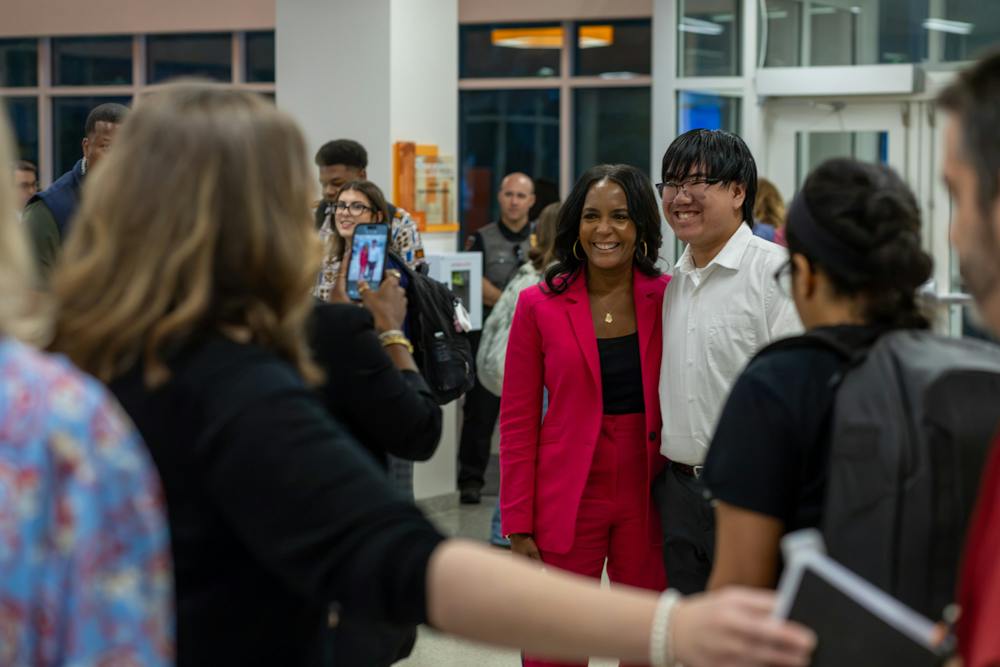
What began as an event featuring lieutenant governor nominee Josh McLaurin (D) turned into an unexpected gathering of three prominent Georgia Democrats Thursday night when Public Service Commission nominee Shelia Edwards and gubernatorial nominee Keisha Lance Bottoms made surprise appearances on Mercer’s Macon campus.
About 40 students gathered in Godsey Science Center on Sept. 17 to hear McLaurin discuss the upcoming election in an event hosted by Mercer Young Democrats. Neither Edwards nor Bottoms had originally been announced as speakers attending that evening.
McLaurin, a current Georgia state senator, began the event by explaining his campaign and its priorities. He mentioned efforts to increase affordable housing, health care and voter participation. He then turned his attention toward the political environment surrounding the November election.
“We may be facing the most culture-war driven, inflammatory, divisive GOP slate that this state had ever seen,” McLaurin said.
McLaurin’s most sustained message throughout the night was directed towards young college voters.
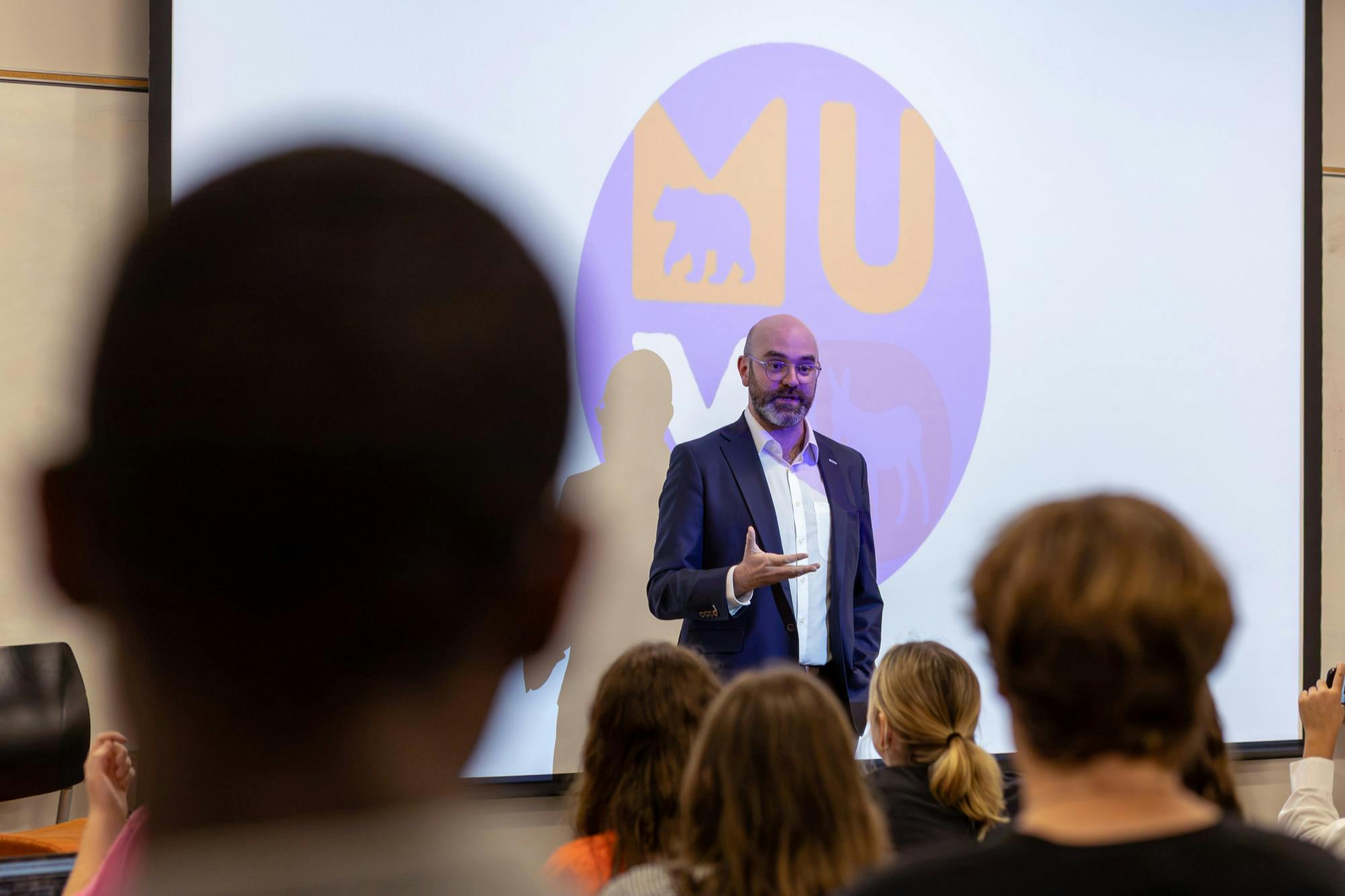
“The election doesn’t start on November 3, it ends on November 3,” McLaurin told the group.
He explained that speaking at Mercer gave him an opportunity to reach students in a part of Georgia whose concerns may differ from Metro Atlanta and other large college campuses in Georgia.
“[Mercer] is a private university, but we have a very large academic community in Georgia beyond just the public universities,” McLaurin told The Cluster afterwards. “When we govern the whole state, we have to be responsive to everybody’s concerns, and it matters to show up in person and communicate that.”
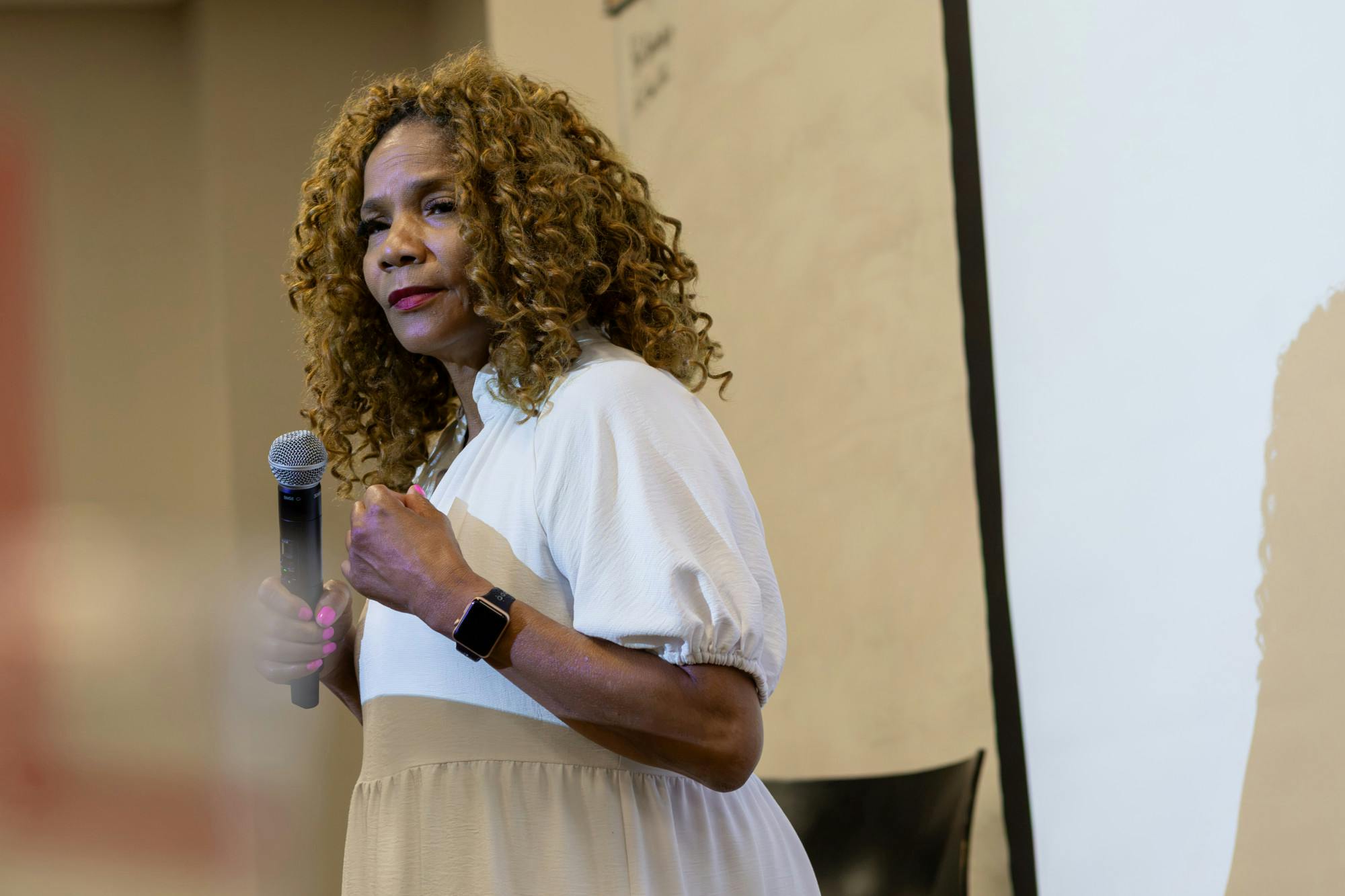
The evening then took its first unexpected turn when Edwards, the Democratic nominee for Georgia Public Service Commission District 5, joined the event.
Edwards emphasized Georgia’s growing number of data centers and their negative effects on utilities and surrounding communities. She argued that communities already facing economic disadvantages should not disproportionately bear the effects of data center development.
“I got involved with this because I care about people,” Edwards said. “I care about what happens to marginalized communities because I came from a marginalized community.”
Edward’s remarks were interrupted by Christopher Grant, chair of Mercer’s political science department, when he announced that Bottoms had arrived, which prompted a brief dispute between Grant and Edwards.
Edwards objected to the interruption and continued wrapping up her remarks before a brief exchange between her and Grant over whether there was time for audience questions. Several students responded in support of Edwards before the event moved on without a Q&A segment for Edwards. Grant later apologized to Edwards after the event.
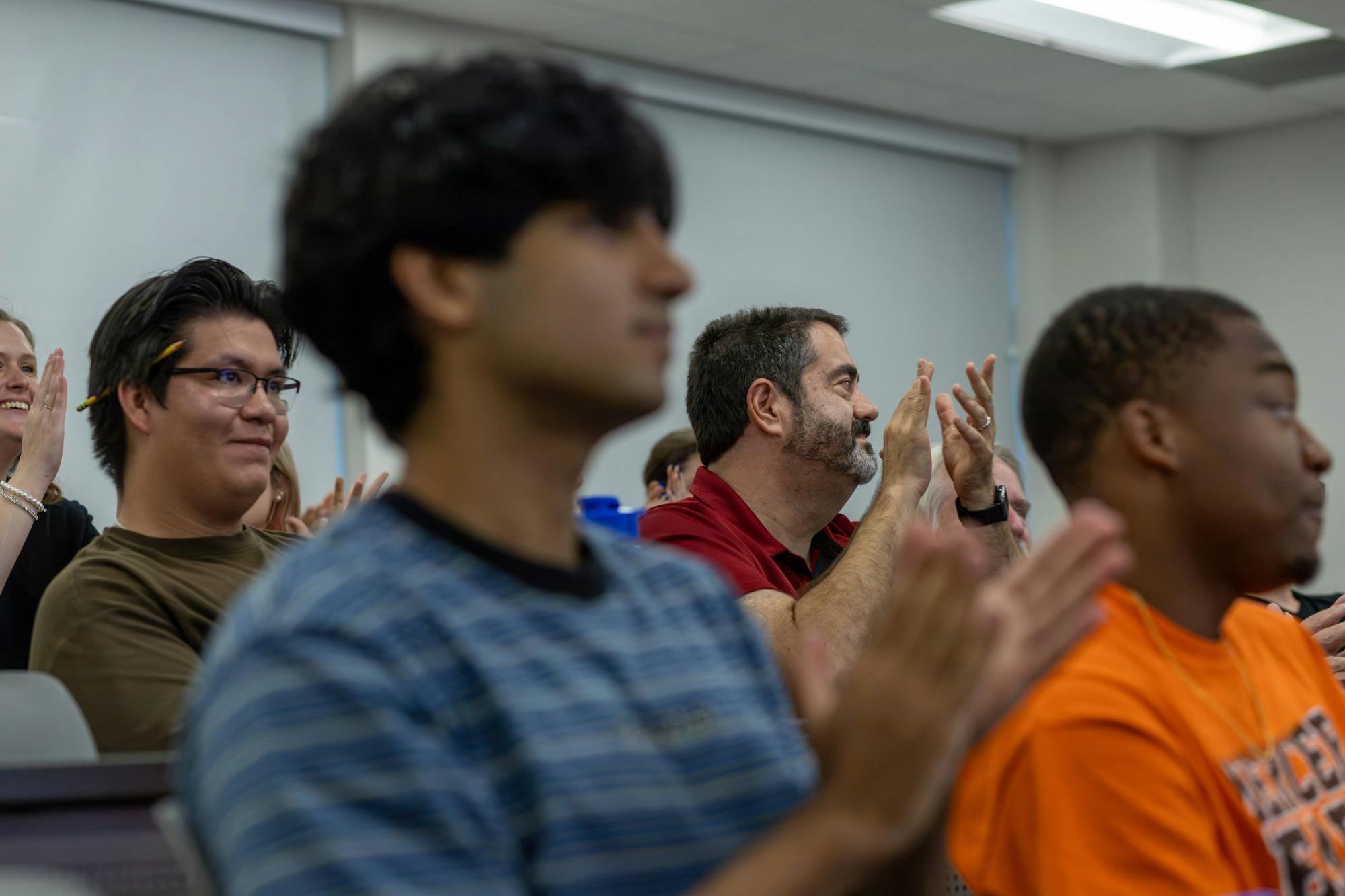
Bottoms, a former Atlanta mayor, entered the room where she was met with applause and excitement from students.
She discussed health care, education, affordability, and data centers, while also answering questions from students.
“I’ll tell you a secret. I used to work with Republican legislators a lot. It just wasn’t salacious enough when we got along,” Bottoms said, drawing laughs from the room. “I do think that we can find common ground on healthcare in the state and hopefully education as well.”
Bottoms, similarly to McLaurin, shared that speaking with college students offered something different from traditional political circles.
“Our college students have so much information about what matters to young people,” Bottoms told The Cluster afterwards. “And it is important to get outside of the political bubble and hear directly from people who are our future.”
Bottoms had already spent part of the day in Middle Georgia before arriving at Mercer. She discussed participating in a Middle Georgia Matters forum earlier that day and criticized her Republican opponent, Rick Jackson, for not attending. Jackson’s campaign declined to debate Bottoms in six of these events around the state, opting instead for a singular debate in Atlanta.
Bottoms ended her remarks by encouraging students to remain engaged beyond a single election, and to vote all the way down the ballot.
The surprise appearances added an extra flare to an event that Mercer Young Democrats President Emma Shields ‘28 said required weeks of preparation.
Shields, a third-year political science and history double major, said because Mercer is a private university, she had to navigate Mercer’s stringent nonpartisan policies to make the event happen.
“It would’ve been way easier if we did it off campus,” Shields said.
She emphasized that moving the event away from Mercer would have undermined one of her primary goals: making political engagement accessible to students.
“I wanted it to be accessible, so I pushed it to Dean Pearson that I want this to be on campus,” Shields asserted. “And I know that it would have been way easier, but why not take the hard way?”
Aidan Susser ‘29, an Emory University student and president of College Democrats of Georgia who helped coordinate the event, was unable to enter because attendance was restricted to the Mercer community. However, he praised the Mercer Young Democrats' hard work in organizing the event despite the challenges.
“This is the first major event in recent Mercer history where Democratic candidates have been brought to campus,” Susser said. “Not just one, not just two, but three statewide Democratic nominees.”
Mercer Young Democrats plans to continue its voter engagement efforts with a voter registration event alongside Mercer URGE and Donuts and Democracy.
Shields said the group’s message to students is ultimately simpler than any one candidate or political party.
“Vote for whoever you want,” Shields said. “Just vote for the people, vote for yourself, let’s have fun.”


