
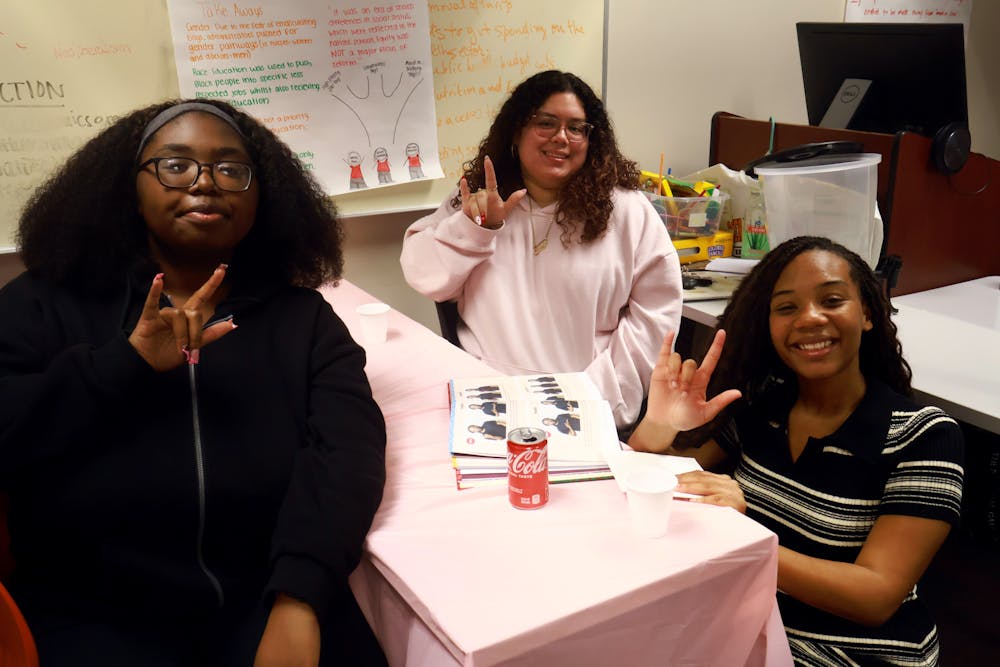
BearSigns, Mercer’s sign language club, held a meeting to spotlight the history of Black American Sign Language during a painting activity on Wednesday. The presentation screened a report from ABC News, “Celebrating and preserving Black American Sign Language," which showcased and explained the history and preservation of BASL
BearSigns’ President Desiree Banks '27 said ASL has regional dialects.
A key difference between ASL and BASL is sign space, according to Franklin Jones Jr., a lecturer in deaf studies at Boston University. Sign space is the physical area that people sign in, and standardized sign space within types of sign languages is important for spatial referencing and clear communication. The size of a person’s signs can signify yelling or mumbling.
“The sign space for BASL users tends to be higher, closer to the forehead, and generally wider overall, whereas standard ASL tends to be farther down and to rely on tighter, more economical choices,” Jones told Boston University's magazine, adding that BASL typically uses two hands for signs, whereas ASL will just use one hand unless otherwise needed.
“We need to try to preserve culture as much as we can, because hearing that BASL is fading. It's kind of sad,” Kamron Dunnah ‘27 said. His favorite sign from the meeting was “clock that tea.”
BASL began during segregation when deaf Black and white students could not legally learn together. The differences in BASL and ASL were exposed during integration when students realized they could not easily communicate with each other.
Carolyn McCaskill, author of “The Hidden Treasure of Black ASL: Its History and Structure," had to learn to sign differently to communicate with the white students in her new school after integration. She became accustomed to code switching, signing in a specific way to accommodate the students she was with, according to the report from ABC News.
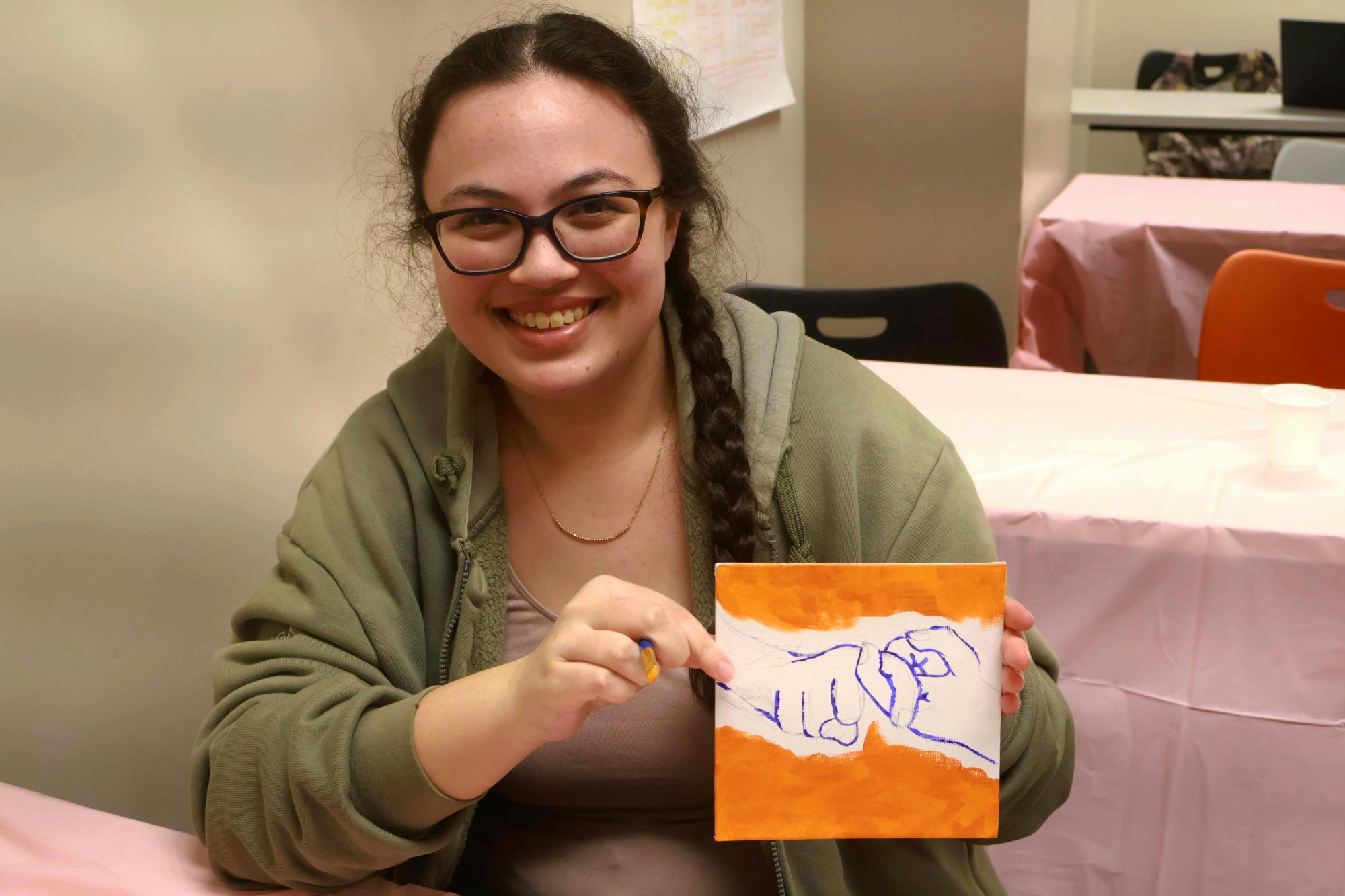
“My biggest takeaway is just learning that Black people have found a new way to communicate with themselves, even within the deaf community,” Abigail Andrews ‘27 said. “It just showed me the resilience of Black people within the deaf community, and it also intrigues me on the similarities and differences between the two languages and how they still come together.”
Her favorite sign from the meeting was also “clock that tea.”
The club took inspiration from Fred Beam for the theme of BASL & Brushstrokes, who BearSigns’ Vice President and Event Coordinator Eliza Penfield '26 said incorporates signs within his art. Beam is an artist, actor, poet and activist for the Black deaf community. He signed “Lift Every Voice and Sing” with Coco Jones at this year’s Super Bowl.
“It was a great opportunity to learn something that I was unfamiliar with, and learn some slang that I use on a daily basis in a different language,” Jada Clements ‘26 said.


